
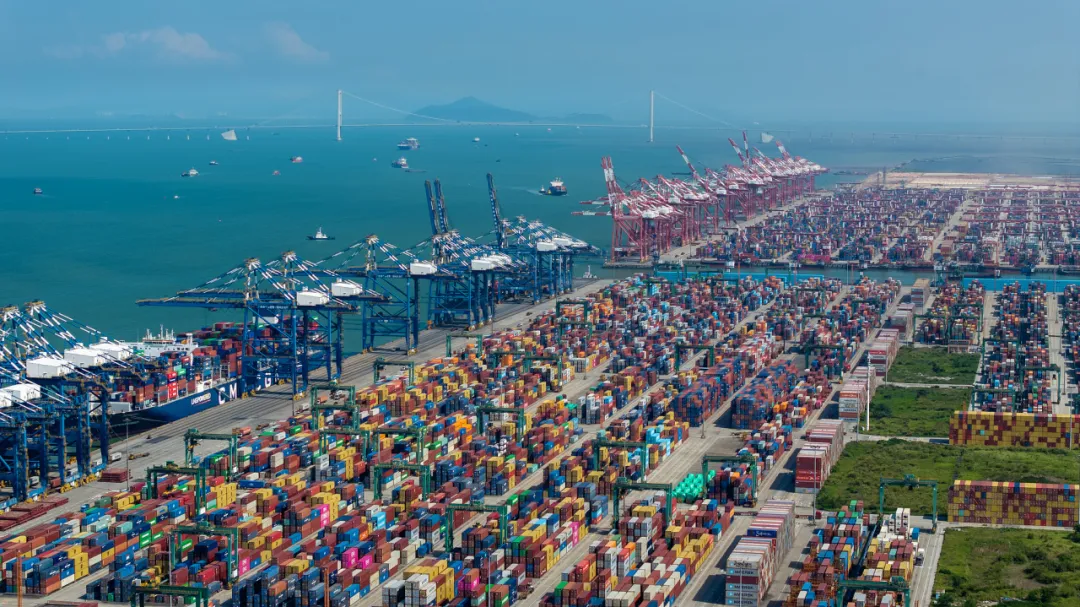
Press Briefing Scene (Photo by Liu Jian) The State Coun…
Import and export data Industry news
Home > News
Industry News | State Council Information Office Holds Press Briefing on China’s Import and Export Performance for the First Three Quarters of 2026
Time:2026-10-21 Source:大灣區進出口商業總會
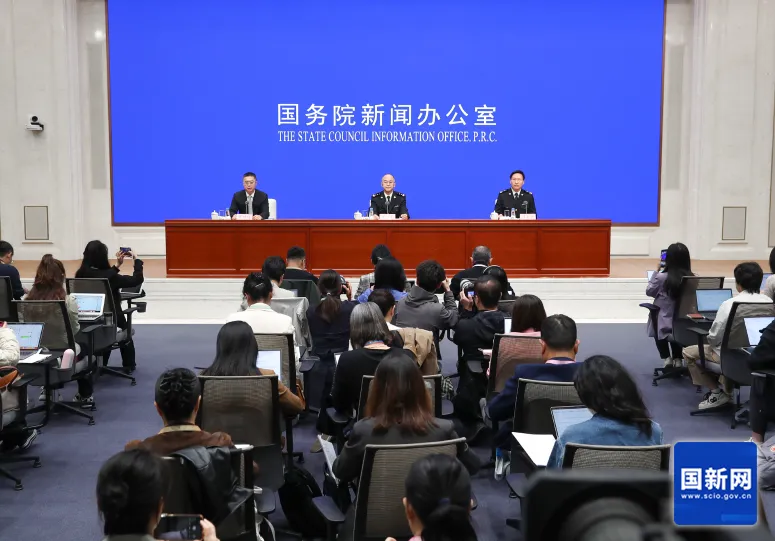
Press Briefing Scene (Photo by Liu Jian)
The State Council Information Office held a press briefing on the morning of October 14. Wang Jun, Spokesperson and Vice Minister of the General Administration of Customs, and Lü Daliang, Spokesperson and Director-General of the Department of Statistical Analysis of the General Administration of Customs, were invited to brief journalists on China’s import and export situation for the first three quarters of 2026 and take questions from the press.
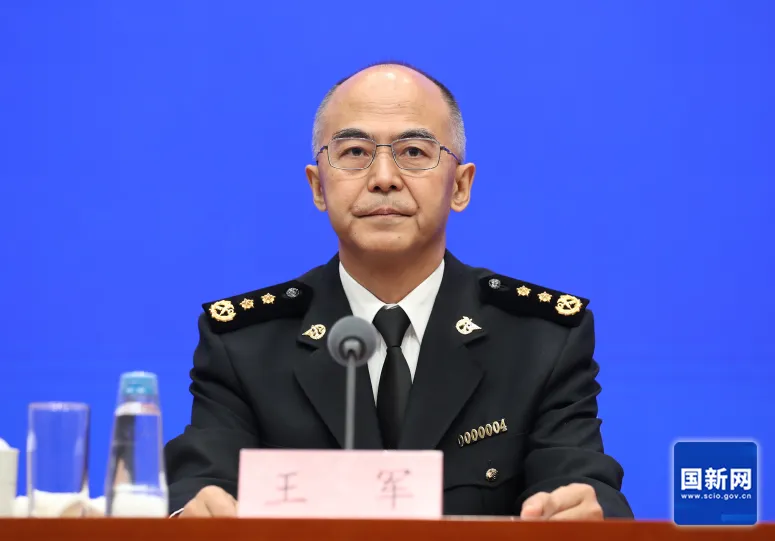
Wang Jun (Photo by Xu Xiang)
Wang Jun, Spokesperson and Vice Minister of the General Administration of Customs: Dear friends from the media, good morning. It’s a pleasure to meet you. I will first brief you on China’s goods trade import and export performance in the first three quarters of this year. Afterwards, my colleagues and I will answer your questions.
Since the beginning of this year, under the strong leadership of the Party Central Committee with Comrade Xi Jinping at its core, China’s economy has maintained an overall stable development momentum toward new growth and higher quality. High-quality development of foreign trade and the building of a strong trading nation have continued to advance, with imports and exports achieving rapid growth with improvements in both volume and quality. According to customs statistics, China’s goods trade imports and exports reached 39.94 trillion yuan in the first three quarters of this year, a year-on-year increase of 18.8%. Of this total, exports stood at 23.2 trillion yuan, up 16.4%, and imports hit 16.74 trillion yuan, rising by 22.3%. There are five major characteristics:
First, imports and exports maintained sustained rapid growth. China’s imports and exports rose by 15.3% in Q1, 18.3% in Q2, and further accelerated to 22.3% in Q3. On a monthly basis, double-digit growth was recorded for six consecutive months. In September, imports and exports reached 5.16 trillion yuan, exceeding 5 trillion yuan for the first time, representing a 27.5% increase. Exports were 3.03 trillion yuan, up 29.6%; imports were 2.13 trillion yuan, an increase of 24.6%.
Second, market diversification has been consolidated and expanded. In the first three quarters, China registered trade growth with more than 180 countries and regions across the globe. Imports and exports with free trade partners reached 19.55 trillion yuan, surging by 30%, contributing over 70% of the incremental growth in foreign trade. Trade with other APEC economies amounted to 24.07 trillion yuan, growing by 23.9%. Meanwhile, trade with ASEAN stood at 6.84 trillion yuan, up 22.7%; trade with the EU reached 4.78 trillion yuan, rising by 8.4%; trade with the US continued to recover, hitting 3.18 trillion yuan with a 4.1% increase.
Third, export drivers continued to shift toward new and higher-quality growth. In the first three quarters, China’s equipment manufacturing industry played a prominent leading role, contributing nearly 90% of export growth. Intermediate goods accounted for more than half of total export value, serving effectively as an “anchor of stability” for global industrial and supply chains. Export products grew smarter and greener: exports of integrated circuits jumped by 99.1%, while green products including electric vehicles, lithium batteries, and wind turbines and their components rose by 72.3%, 36.4% and 22.4% respectively.
Fourth, all types of market entities advanced in tandem. In the first three quarters, private enterprises recorded imports and exports of 22.73 trillion yuan, up 19.1%, accounting for 56.9% of total foreign trade volume and retaining their position as the largest player in foreign trade. Foreign-invested enterprises posted imports and exports of 11.69 trillion yuan, rising by 19%. State-owned enterprises registered imports and exports of 5.46 trillion yuan, an increase of 17.8%.
Fifth, foreign trade became more balanced and coordinated. In the first three quarters, import growth outpaced export growth by 5.9 percentage points. Thanks to the development of China-Europe Railway Express and the New International Land-Sea Trade Corridor, central and western regions have markedly accelerated opening-up. Imports and exports of central China rose by 20.5%, while those of western China increased by 25.7%.
Overall, China’s foreign trade effectively withstood various external shocks and challenges in the first three quarters and maintained sound growth momentum. Although the current international situation is volatile with persistent risks and challenges, the driving force, vitality and resilience of China’s foreign trade have been growing stronger. There exists a solid foundation and support for continued import and export growth in the fourth quarter.
The national customs authorities will resolutely implement the decisions and arrangements of the Party Central Committee and the State Council, faithfully fulfill the mission of safeguarding national gateways and promoting development, continuously serve as an intersection hub for domestic and international dual circulation, steadily improve customs supervision efficiency and service quality, firmly guard national security, further advance cross-border trade facilitation, and fully boost innovative, high-quality foreign trade development through improved supervision, enhanced security, greater convenience and rigorous anti-smuggling efforts. Thank you.
Q&A Session

Question by reporter from China Media Group (Photo by Liu Jian) Reporter from China Media Group: China’s foreign trade maintained growth in the first three quarters. Could you elaborate on the highlights and positive changes, and share your judgment on the outlook for imports and exports? Thank you.
Wang Jun: Thank you for your question. The performance of China’s foreign trade in the first three quarters can be summed up in four words: fast, new, superior and robust.
Fast means rapid growth. Vertically speaking, the foreign trade growth rate for the first three quarters is the highest for the same period in the past five years, with quarterly and monthly growth generally accelerating. Horizontally, latest international data shows that such trade growth ranks high among major economies, and China remains the world’s largest trader of goods.
New means new growth drivers. Last month, the China Advanced Manufacturing Conference further clarified the direction of intelligent, green and integrated development. In practice, as China’s advanced manufacturing sector expands and upgrades, industrial system upgrading and integrated development continuously inject new momentum into foreign trade growth. In the first three quarters, the combined imports and exports of industrial robots, electronic components, computer parts and electrical equipment exceeded 10 trillion yuan, up 58.9%, pulling overall imports and exports up by 11.3 percentage points. The brand influence of “Made in China” keeps rising. Exports of independent brands grew by 26.7%, accounting for 24.8% of total exports, 2 percentage points higher than the same period last year.
Superior means optimized trade structure. As I just mentioned, China enjoys stable and diversified trade partners, coordinated growth among enterprises of all types and balanced foreign trade development. Cross-border logistics channels are also being further optimized. In the first three quarters, economic and trade cooperation between China and neighboring countries deepened, and in-depth integration within the Guangdong-Hong Kong-Macao Greater Bay Area pushed up the share of road imports and exports by 3.4 percentage points. With expanding trade in high-tech, high value-added and fresh agricultural and food products, air freight imports and exports increased by 37.2%.
Robust means high-quality opening-up. China is opening its door wider and wider, expanding space for mutually beneficial international economic and trade cooperation. It provides reliable supplies for stable global industrial and supply chains and creates opportunities for global enterprises to tap into the Chinese market. In the first three quarters, China achieved two-way growth in imports and exports with more than 120 countries and regions. Among its FTA partners, over 70% recorded two-way trade growth. Dividends from free trade agreements continue to be released to benefit all parties.
On the whole, China’s foreign trade posted strong growth in the first three quarters, powering global economic and trade expansion. Regarding the full-year foreign trade outlook, we note that uncertainties remain in the global environment. Geopolitical conflicts continue to disrupt global economic and trade order, while trade protectionism and unilateralism are on the rise, posing multiple challenges to foreign trade development. At the same time, the world economy remains resilient. Supported by China’s ultra-large market and complete industrial system, with existing and new policies working in synergy, there are foundations and conditions for steady growth of China’s foreign trade in the next stage. Thank you.

Question by reporter from Hong Kong Ta Kung Wen Wei Media Group (Photo by Liu Jian) Reporter from Hong Kong Ta Kung Wen Wei Media Group: We know that high-quality Belt and Road cooperation continues to forge ahead, injecting new vitality into economic and trade ties. Could you introduce China’s overall foreign trade performance with Belt and Road partner countries in the first three quarters this year, and major new highlights? Thank you.
Wang Jun: Thank you for your question. I will invite Mr. Lü Daliang to answer this question.

Lü Daliang (Photo by Xu Xiang), Spokesperson and Director-General of the Department of Statistical Analysis of the General Administration of Customs: Thank you for the question. In recent years, economic and trade cooperation between China and Belt and Road partner countries has deepened steadily with expanding bilateral trade volume. In the first three quarters of this year, China’s imports and exports with Belt and Road partners reached 20.37 trillion yuan, up 17.1%. Exports rose by 16.6% and imports by 17.9%. There are three major highlights:
First, mutual achievements in foreign trade. With solid progress in high-quality Belt and Road cooperation, the two-way, win-win trend of foreign trade development between China and partner countries has become more evident. In the first three quarters, China saw trade growth with nearly 80% of Belt and Road partner countries. These partners accounted for 51% of China’s total import and export volume and contributed 47.1% to China’s foreign trade growth in the same period. Estimated from latest international data, in the first seven months, China was among the top three trading partners for 134 Belt and Road countries and the largest trading partner for 74 of them.
Second, diversified cross-border multi-modal logistics. In the first three quarters, China’s imports and exports with Belt and Road partners via water transport reached 12.99 trillion yuan, up 7.1%. Road and rail transport registered markedly faster growth of 34.1% and 16.4% respectively. Air transport surged by 60.1%, the fastest growth among major transport modes. China Customs fully supports the development of the “Air Silk Road”, expanding multi-modal transport services such as air-to-air transshipment and air-rail combined transport, and promoting the “airside direct clearance” model to reduce procedures including cargo pickup, unloading and security inspection, further boosting cross-border air freight efficiency.
Third, continuously expanding cooperation space. On the export side, China advances landmark projects and small yet beautiful livelihood initiatives. In the first three quarters, exports of contracted engineering projects to Belt and Road partners neared 100 billion yuan, supporting major infrastructure construction. Exports of surgical robots to these countries jumped 2.9 times, helping them improve medical and healthcare services. On the import side, China Customs has successively implemented regional integrated market access for dried chili peppers, cashews, coffee beans, wild aquatic products and other goods from African diplomatic partners since the start of this year. In the first three quarters, China’s imports of agricultural products from Egypt, Senegal, Kenya and other countries all achieved double-digit growth. Just last month, China Customs granted market access to plums and apricots from Tajikistan, laurel leaves from Türkiye and cherries from South Africa. Going forward, more high-quality products from Belt and Road partner countries will enter the Chinese market, expanding mutually beneficial cooperation between China and these nations. Thank you.

Question by reporter from Elephant News (Photo by Liu Jian) Reporter from Elephant News: China’s exports maintained relatively fast growth in the first three quarters. What factors are driving this growth? Also, what is your forecast for export trends going forward? Thank you.
Wang Jun: Thank you for your question. China’s goods trade exports hit 23.2 trillion yuan in the first three quarters, up 16.4%. Exports in Q3 exceeded 8 trillion yuan for the first time, rising by 22%. The sound export growth mainly benefits from China’s complete industrial chain system, the expansion of advanced manufacturing sectors, and markedly strengthened innovation capacity, competitiveness and comprehensive strength, enabling China to respond precisely, promptly and effectively to global production and consumption demand and deliver stable, high-quality supplies.
We can look at it from the production and consumption perspectives.
From the production side: In the first three quarters, China’s ship exports exceeded 350 billion yuan, up 24.6%. Exports of 300,000-ton oil tankers, large LPG and LNG vessels all doubled, while green-fuel ships powered by methanol and ammonia continue to be upgraded, supporting global energy transportation. The industrial robot industry accelerates digital and intelligent transformation, with exports nearing 10 billion yuan, up 16.9%, supporting manufacturing upgrading of trade partners. Exports of electronic components rose by 70%, and wires and cables and other electrical equipment increased by 25.3%, empowering global AI computing power and power infrastructure development. Amid unstable Middle East situation and tight global supply of energy and chemical raw materials, China’s exports of basic organic chemicals rose by 24.4% and primary-form plastics by 32.2% in the first three quarters, supplying raw materials for production worldwide.
From the consumption side: Responding to the global trend of scenario-based and personalized consumption, we focus not only on large orders but also small niche demands. For instance, immersive first-person short videos have grown hugely popular in recent years. Domestic enterprises tailor-made portable filming devices with functions including human tracking, voice and gesture control, and automatic AI editing, which are well received by global short-video creators. China’s exports of digital cameras rose by 40.5% in the first three quarters. Many similar products are emerging, ranging from mini ice makers for outdoor camping to plug-and-play portable air conditioners. High-quality, high-tech “Made in China” products are shipped across oceans.
Regarding export prospects in Q4, we believe the fundamentals underpinning exports remain unchanged. We will accelerate the building of a modern industrial system spearheaded by advanced manufacturing. Chinese manufacturing, which covers both cutting-edge technologies and practical mass-market products, will provide richer options for production and consumption of trade partners and global consumers. Thank you.

Question by reporter from Dazhong News & Dazhong Daily (Photo by Liu Jian) Reporter from Dazhong News & Dazhong Daily: This year marks China’s APEC Year. Next month, the 33rd APEC Economic Leaders’ Meeting will be held in Shenzhen. Could you introduce notable characteristics of China’s imports and exports with other APEC economies in the first three quarters? How will customs authorities implement the consensus on APEC economic and trade cooperation? Thank you.
Wang Jun: Thank you. I will invite Mr. Lü Daliang to answer this question.
Lü Daliang: Thank you for your question. According to China Customs statistics, China’s imports and exports with other APEC economies reached 24.07 trillion yuan in the first three quarters, a year-on-year increase of 23.9%, accounting for 60.3% of China’s total import and export volume, 2.5 percentage points higher than the same period last year. This year’s APEC China Year prioritizes three areas: Openness, Innovation and Cooperation, which is also a key driver of rapid trade growth between China and other APEC economies.
Openness is the lifeline of Asia-Pacific cooperation. Currently, China has signed free trade agreements with 15 other APEC economies. In the first three quarters, China’s total imports and exports with APEC FTA partners reached 18.2 trillion yuan, up 29.2%, representing 75.6% of China’s trade volume with other APEC economies. China Customs vigorously promotes AEO (Authorized Economic Operator) mutual recognition with other APEC economies, covering 10 economies to date. In the first three quarters, imports and exports of Chinese AEO enterprises with other APEC economies rose by 28.8%, accounting for 44.5% of China’s trade with other APEC economies.
Innovation creates new trade growth points. In electronics, automobile, machinery and other sectors, China and other APEC economies have formed complementary and closely linked innovation chains, driving two-way growth in high-tech product trade. In the first three quarters, China’s imports and exports of high-tech products with other APEC economies rose by 50.3% to 6.66 trillion yuan, exceeding the full-year figure of last year and contributing nearly half of the incremental trade volume between China and other APEC economies. In particular, integrated development of advanced manufacturing boosted rapid expansion of trade in high-end and green products. In the first three quarters, China’s imports of electronic components from other APEC economies rose by 56%, and exports of the “new three” products increased by 37.1%.
Cooperation injects new momentum into trade growth. Since the start of this year, China has hosted hundreds of conferences and events to deepen Asia-Pacific cooperation. Following the Smart Customs Partnership Programme, China Customs leverages technological empowerment and institutional innovation to build consensus within the APEC customs community, jointly safeguarding trade security and facilitation. For example, we have strengthened cooperation with other APEC economies on food import and export standards, inspection and quarantine, and launched facilitation measures such as automatic renewal and list registration for overseas enterprises. In the first three quarters, China’s food imports and exports with other APEC economies neared 800 billion yuan, accounting for more than half of the national total for food trade.
Going forward, China Customs will continue to fulfill its duties to help deliver fruitful outcomes for APEC China Year and make new contributions to stable trade growth in the Asia-Pacific and the world. Thank you.

Question by reporter from Yicai (Photo by Liu Jian) Reporter from Yicai: Thank you. You just mentioned China’s import growth outpaced export growth in the first three quarters. What are the main characteristics of China’s import trade this year, and what are the key drivers of import growth? Thank you.
Wang Jun: Thank you. China’s imports grew by 22.3% in the first three quarters. Starting from March, import growth has exceeded 20% for seven consecutive months. Import volume in September surpassed 2 trillion yuan for the first time. Imports grew faster than exports, by 5.9 percentage points in the first three quarters. Calculated by individual countries and regions, import growth outpaced export growth for more than 110 countries and regions, promoting balanced trade development. Meanwhile, the number of importing enterprises increased. A total of 289,000 enterprises recorded import activities in the first three quarters, 12,000 more than the same period last year, including over 11,000 enterprises with import value exceeding 100 million yuan, an increase of nearly 700.
The rapid import growth in the first three quarters mainly stems from stable economic performance in China and continuous release of the ultra-large market effect. The expanding advanced manufacturing sector generates strong demand for key components and other intermediate goods. In the first three quarters, imports of memory components rose by 150%, integrated circuits by 56.6%, and aircraft parts by 17.6%. Improved production activities also provide steady support for imports of upstream raw materials. In the first three quarters, imports of metal ores including iron, aluminum and nickel exceeded 1.2 billion tonnes, and oil and gas exceeded 400 million tonnes. Meanwhile, as residents’ consumption demand shifts from “quantity” to “quality”, demand for imported high-quality goods from all countries continues to expand. In the first three quarters, imports of fresh durians from Malaysia jumped by 330%, salmon from the Faroe Islands rose by 41.4%, Italian olive oil by 28.6%, and French perfume by 28.5%.
The expanding import volume not only reflects domestic production and consumption demand, but also fully demonstrates tangible results of China’s orderly autonomous and unilateral opening-up. China is not merely the “world factory”, but also a “world market” featuring open sharing. Starting from May 1 this year, China implemented zero-tariff treatment for all 53 African diplomatic partners, bringing the total number of zero-tariff countries to 63. China’s imports from these countries reached 867.53 billion yuan in the first three quarters, up 15.3%. We continue to expand market access. Since the start of this year, market access has been added for hundreds of batches of agricultural and food products including bananas from Myanmar, corn from Pakistan and apples from Belgium. We have successfully held eight editions of the China International Import Expo (CIIE), attracting more than 27,000 enterprise participations from over 180 countries and regions, with intended turnover exceeding 580 billion US dollars, providing a premium platform for global high-quality goods to enter the Chinese market.
Next month, the 9th CIIE will be held in Shanghai, where a large number of cutting-edge tech products will be showcased. Customs authorities have rolled out 18 facilitation measures to support this CIIE, covering the whole chain from exhibit import, customs supervision to post-exhibition disposal. A new measure allows bonded goods stored in bonded warehouses to participate in the exhibition after submitting guarantees. These concrete actions help more high-quality products access the Chinese market. Thank you.

Question by reporter from Xinhua Xinhua Finance (Photo by Liu Jian) Reporter from Xinhua Xinhua Finance: The global AI investment boom continues, driving rising demand for computing power and power equipment. Could you introduce China’s export performance of related products in the first three quarters? Thank you.
Wang Jun: Thank you for your question. As you mentioned, the vigorous development of artificial intelligence accelerates global investment in computing infrastructure, with expanding demand for computing terminal equipment and intermediate manufacturing products. Meanwhile, the operation of large-scale computing facilities pushes up global demand for power equipment. Leveraging its complete industrial system and technological innovation capacity, China provides solid support for rising global demand for computing power and electricity.
On computing power: In the first three quarters, exports of integrated circuits rose by 99.1%, computer accessories jumped by 210%, and storage components such as solid-state hard drives increased by 130%, ensuring stable supply of intermediate products for the global computing industrial chain. Exports of servers and other data processing equipment rose by 7.2%, supporting global computing infrastructure construction. In addition, Chinese AI glasses, intelligent bionic robots and other terminal products keep entering the international market, enriching global AI application scenarios.
On power equipment: Product exports saw diversified growth in the first three quarters. Covering power generation, transmission and energy storage:
- Power generation: Exports of photovoltaic products rose by 10.3%, and wind turbines and their components by 22.4%, continuously filling gaps in global clean energy supply.
- Power transmission: Exports of wires and cables increased by 28.1%, and transformers by 22.5%.
- Energy storage: Exports of various storage batteries rose by 34.8%, sold to more than 200 countries and regions worldwide.
From thumb-sized high-speed optical communication modules to ton-level server cabinets for AI computing, from household wires to UHV converter transformers for long-distance high-capacity power transmission, from portable power banks to large industrial and commercial energy storage equipment, and from small single batteries to containerized integrated energy storage systems, countless Chinese enterprises deliver practical, mature and reliable Chinese products, experience and solutions for global computing infrastructure, stable power grid operation and secure power supply. Thank you.
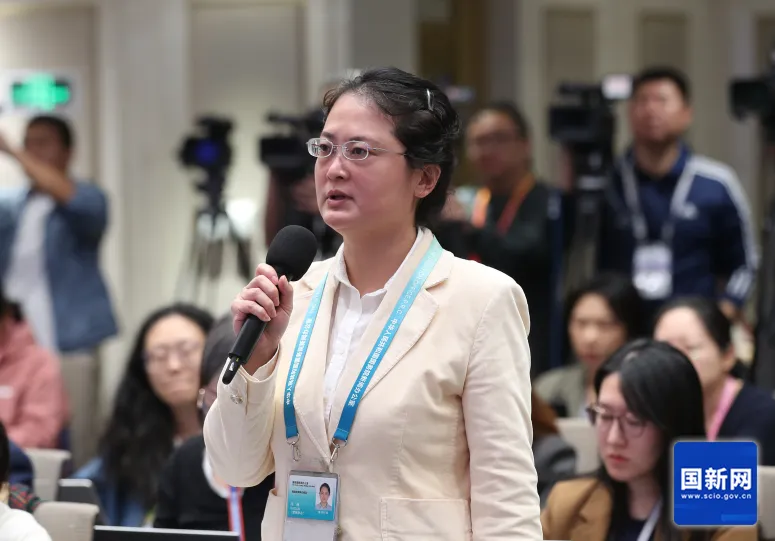
Question by reporter from Hong Kong Bauhinia Magazine (Photo by Liu Jian) Reporter from Hong Kong Bauhinia Magazine: In May this year, the General Administration of Customs issued 20 measures to support the development of the Guangdong-Hong Kong-Macao Greater Bay Area. What results have been achieved since the policy release? Thank you.
Wang Jun: Thank you. I will invite Mr. Lü Daliang to answer this question.
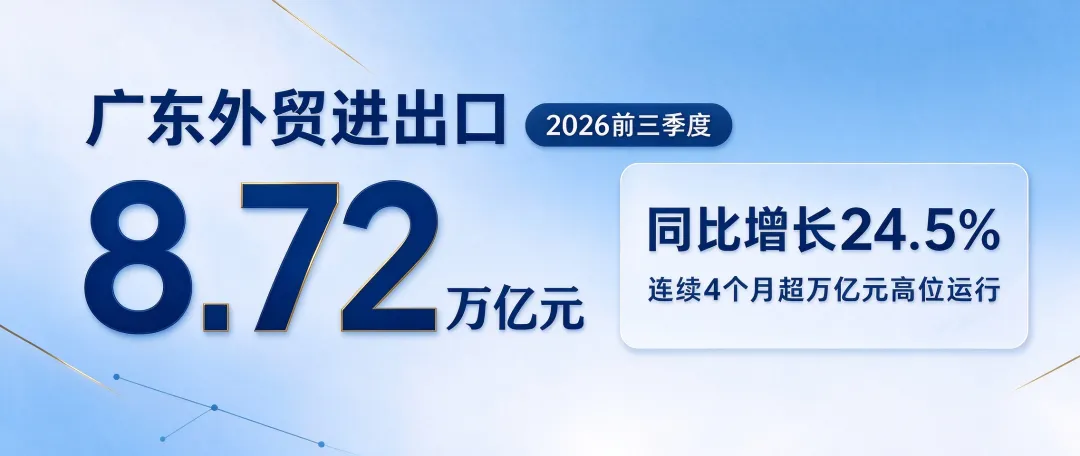
Lü Daliang: Thank you for your question. The Guangdong-Hong Kong-Macao Greater Bay Area is one of China’s most open and economically dynamic regions. In the first three quarters of this year, imports and exports of the nine mainland cities in the GBA reached 8.42 trillion yuan, a year-on-year increase of 24.7%, accounting for 21.1% of China’s total import and export volume, 1 percentage point higher than the same period last year. Among this, imports and exports in Q3 hit 3.13 trillion yuan, crossing the 3 trillion-yuan threshold for the first time, with year-on-year growth exceeding 30%.
In May this year, focusing on integrated development, building an innovation hub and fostering new business forms and models, customs authorities issued the Measures of the General Administration of Customs to Support the Development of the Guangdong-Hong Kong-Macao Greater Bay Area. Over more than five months, these measures have been rolled out one after another and achieved phased outcomes.
In strengthening rule alignment and institutional connectivity: The reform of “batch inspection” for exported agricultural and food products has been promoted. Regulatory authorities of Hong Kong and Macao have recognized remotely issued inspection and quarantine certificates, supporting safe and stable supply of “basket goods” for the Greater Bay Area. In the first three quarters, exports of agricultural products from the nine mainland GBA cities to Hong Kong and Macao exceeded 20 billion yuan. The dedicated air-land express lane for fresh and live goods has been optimized. Relying on the linkage between Hong Kong International Airport and the Hong Kong-Zhuhai-Macao Bridge air-bridge, fresh agricultural and food products can enter the mainland market more conveniently. In the first three quarters, combined imports of dried and fresh fruits and edible aquatic products via the Hong Kong-Zhuhai-Macao Bridge rose fivefold.
In supporting sci-tech and industrial innovation: Customs services cater to innovation demands with available regulatory tools. Inspection and control modes have been innovated. Vacuum-packed and other cargo unsuitable for unpacking at ports can be transferred to qualified sites for inspection, lowering damage risks. Measures have benefited high-tech goods worth over 140 billion yuan. Together with relevant authorities, a joint supervision mechanism for inbound and outbound special biomedicine products has been established in Shenzhen, switching from serial supervision to faster parallel supervision. So far, 31 enterprises and research institutions have joined the pilot programme. In the first three quarters, imports and exports of high-tech products of the nine mainland GBA cities rose by 41.4%, accounting for 25.3% of the national total of such products.
In fostering new business forms and models: Leveraging the core advantages of the “bonded plus” model, customs expands application scenarios of bonded functions within the Greater Bay Area. For major technical equipment such as aircraft imported by enterprises in comprehensive bonded zones for bonded financial leasing which cannot physically enter the zone, cross-site entrusted customs supervision has been implemented, solving the challenge of enjoying preferential policies without physical entry into the zone. In the first three quarters, 67 aircraft were imported under this model. Bonded maintenance business for automobile gearboxes, computing servers and components has been launched in comprehensive bonded zones. In the first three quarters, the value of goods for bonded maintenance imports and exports of the nine mainland GBA cities reached 45.33 billion yuan, up 24.9%.
Going forward, customs authorities will continue to align with the development needs of the Guangdong-Hong Kong-Macao Greater Bay Area to deliver more outcomes of the Measures, helping build a first-class bay area and world-class urban cluster full of vitality and international competitiveness. Thank you.

Question by reporter from National Business Daily (Photo by Liu Jian) Reporter from National Business Daily: The 26th China International Fair for Investment and Trade was successfully held last month, attracting government agencies, industrial and business delegations worldwide. Foreign-funded enterprises remain optimistic about the Chinese market and actively seize development opportunities. Could you introduce the import and export performance of foreign-invested enterprises in the first three quarters this year, and highlight growth sectors? Thank you.
Wang Jun: Thank you. Foreign-invested enterprises are an important pillar of China’s foreign trade and participants and beneficiaries of China Opportunity 2.0. In the first three quarters of this year, imports and exports of foreign-invested enterprises in China reached 11.69 trillion yuan, up 19%, hitting a record high for the same period. Foreign enterprises actively seize opportunities from China’s industrial upgrading and development of new quality productive forces, deeply integrating into China’s industrial and innovation chains, continuing to invest and expand in China. It can be summarized with three “shared benefits”:
First, sharing market dividends to expand market reach and boost efficiency. China has a population of over 1.4 billion, including more than 400 million middle-income earners. It has remained the world’s second-largest importer for 17 consecutive years. The ultra-large market provides foreign enterprises with broad room for development and long-term stable growth expectations. In the first three quarters, imports of foreign-invested enterprises rose by 21.1%. Their consumer goods imports accounted for 34.5% of China’s total consumer goods imports, with watches and clocks accounting for 83.4% and garments 62.3% of China’s corresponding import volume.
Second, sharing development dividends to stabilize industrial chains and drive growth. Through industrial development, China acts as a stabilizer and key hub for global industrial cooperation, offering a premium platform and channel for foreign enterprises to embed themselves deeper into global industrial chains. In the first three quarters, foreign-invested enterprises imported and exported 7.9 trillion yuan of intermediate goods, up 27.4%. Key advanced manufacturing components including electronic elements, computer parts and aircraft parts saw brisk two-way trade. More and more foreign enterprises achieve growth while expanding their footprint in China. In the first three quarters, over 150 foreign-invested enterprises recorded import and export volume exceeding 10 billion yuan, 20 more than last year.
Third, sharing innovation dividends to optimize structure and upgrade industrial level. China’s pool of high-caliber talent, sound innovation atmosphere and abundant application scenarios help enterprises conduct R&D and product commercialization, accelerating product iteration and upgrading among foreign enterprises operating in China. In the first three quarters, exports of foreign-invested enterprises rose by 17.2%. Exports of high-tech products surged by 42.1%, significantly higher than their overall export growth, and their share of high-tech products in total exports rose by 5.6 percentage points. Exports of electric vehicles, 3D printers, biomedicine and medical instruments all showed robust growth momentum.
At present, all restrictions on foreign market access in the manufacturing sector have been lifted, and national treatment for foreign-invested enterprises is continuously implemented. We believe more foreign enterprises will firmly deepen their investment in China, achieve mutual growth with Chinese enterprises and share China Opportunity 2.0. Thank you.

Question by reporter from Nanfang Daily / Nanfang+ (Photo by Liu Jian) Reporter from Nanfang Daily / Nanfang+: Cross-border e-commerce matters to people’s consumption and merchants’ overseas sales, and has been included in government work reports for years. How did China’s cross-border e-commerce imports and exports perform in the first three quarters this year? What innovative measures has customs introduced to support cross-border e-commerce development? In what aspects will supervision and services be optimized next? Thank you.
Wang Jun: Thank you. I will invite Mr. Lü Daliang to answer this question.
Lü Daliang: Thank you for your question. China conducts cross-border e-commerce statistical surveys every six months, covering the first half of each year and the full year of the previous year. The survey for H1 2026 has been completed, and official data has been published on the website of the General Administration of Customs. For cross-border e-commerce performance in the first three quarters of this year, we provide preliminary estimated figures.
According to preliminary customs estimates, cross-border e-commerce imports and exports reached approximately 2.18 trillion yuan in the first three quarters, up 4.4%. Exports were about 1.75 trillion yuan, an increase of 4.6%, and imports around 434.05 billion yuan, rising by 3.3%.
Based on the H1 survey, China’s main cross-border e-commerce export commodities include apparel, footwear, bags, jewelry, home textiles and kitchenware. Major import categories are healthcare supplements and medical devices, beauty and personal care products, apparel, footwear, bags and jewelry. Export goods mainly come from Guangdong, Zhejiang, Fujian and Jiangsu, while imports are mostly destined for Guangdong, Jiangsu, Zhejiang, Shanghai and Shandong.
Cross-border e-commerce follows digital trends and caters to diverse, personalized consumption scenarios, demonstrating strong resilience and vitality. China Customs has long studied supportive policies to foster cross-border e-commerce development. Recently, we fully replicated and promoted the supervision model of “inspection prior to shipment”, further improving customs clearance efficiency for consolidated export cargo and cutting export costs for enterprises. We have also expanded cross-border e-commerce logistics channels, supporting enterprises to conduct cross-border e-commerce exports via international road transport, cross-border rail combined transport and other modes.
Going forward, customs authorities will focus on improving supervision quality and clearance facilitation, enhancing supervision efficiency, empowering supervision with technology and deepening collaborative governance to promote high-quality development of cross-border e-commerce. Thank you.

Question by reporter from Xinhuanghe Client (Photo by Liu Jian) Reporter from Xinhuanghe Client: Private enterprises remain China’s largest foreign trade entity. What highlights and changes have been seen in imports and exports of private enterprises in the first three quarters? What facilitation measures will customs launch next to support private enterprises exploring overseas markets? Thank you.
Wang Jun: Thank you. The private economy is a new force advancing Chinese modernization and an important foundation for high-quality development. In foreign trade, private enterprises are playing an increasingly important role in stabilizing trade volume and optimizing structure. In the first three quarters, private enterprises recorded imports and exports of 22.73 trillion yuan, up 19.1%, with many bright spots for high-quality foreign trade development, mainly reflected in the following aspects:
First, accelerating volume growth. Since the start of this year, import and export growth of private enterprises has picked up quarter by quarter, up 16.5% in Q1, 17.3% in Q2 and further to 23% in Q3. In the first three quarters, the import and export volume of private enterprises exceeded 20 trillion yuan for the first time for the same period, accounting for 56.9% of China’s total foreign trade volume, 0.1 percentage point higher than the same period last year. Their position as the primary foreign trade entity continues to consolidate.
Second, innovation vitality in industrial development. Private enterprises keep up with global cutting-edge trends, and their foreign trade structure is rapidly shifting toward new, high-value and intelligent tracks. In the first three quarters, the share of high-tech products in private enterprises’ imports and exports rose by 2.6 percentage points. Imports of electronic components and computer parts rose by 51.2% and 136.1% respectively. Exports of the “new three” products increased by 43.6%. Exports of industrial robots and CNC machine tools accounted for more than 70% of China’s total exports of such goods.
Third, improved precision in responding to market demand. Insight into market demand is one of the keys for private enterprises to explore overseas markets. For example, the global trend of refined camping and outdoor vacations continues to rise. Chinese private enterprises have developed new prefabricated tent houses exported in modular packages that can be easily assembled after delivery. Featuring novel design and reliable quality, these products have become popular overseas. In the first three quarters, private enterprises’ exports of various prefabricated buildings rose by nearly 30%.
Fourth, brand building enhances influence. In the first three quarters, exports of private enterprises’ own-brand products rose by 29.6%, accounting for 70.7% of China’s total exports of own-brand products. From light consumer goods to high-end equipment, smart home appliances to new energy equipment, a growing number of private enterprise independent brands enter the global market, showcasing the technological strength and product quality of Made in China and polishing the brand.
Fifth, new business forms help tap new markets. Relying on the convenience of market procurement trade and other new forms, numerous private players collaborate efficiently to discover distinctive creative goods and seize overseas consumer market opportunities. Earlier this year, a horse zodiac plush toy accidentally became a hit overseas because its mouth was sewn the wrong way. As Christmas approaches, Yiwu in Zhejiang has launched dynamic butterfly ornaments and other festive lighting products to light up holiday markets in Europe and America. In the first three quarters, private enterprises’ exports via market procurement trade neared 700 billion yuan, with toys, home appliances and lighting products achieving rapid export growth.
The growth in both volume and quality of private enterprises’ foreign trade cannot be achieved without policy support. Customs authorities will continue to implement policies to stabilize foreign trade, stay responsive to corporate demands, deepen reform, vigorously advance cross-border trade facilitation, foster a first-class port business environment, strengthen corporate credit cultivation, and accurately support all types of market entities to stabilize markets and secure orders. Thank you.

Question by reporter from Red Star News (Photo by Liu Jian) Reporter from Red Star News: You just mentioned that trade between China and ASEAN countries continues to grow rapidly. Could you introduce bilateral trade performance and customs service measures? Thank you.
Wang Jun: Thank you. I will invite Mr. Lü Daliang to answer this question.
Lü Daliang: Thank you for your question. ASEAN is China’s largest trading partner. In the first three quarters of this year, China’s imports and exports with ASEAN reached 6.84 trillion yuan, up 22.7%, accounting for 17.1% of China’s total import and export volume, 0.5 percentage points higher than the same period last year. Exports rose by 23.4% and imports by 21.4%. Quarter on quarter, China’s imports and exports with ASEAN in Q3 hit 2.5 trillion yuan, up 31.4%.
For many years, China and ASEAN have forged ahead hand in hand, forming one of the most successful and dynamic models of Asia-Pacific regional cooperation. To boost trade with ASEAN, China Customs actively optimizes supervision services and takes proactive steps to upgrade China-ASEAN economic and trade cooperation. I would like to share two key recent initiatives:
First, fully supporting the smooth holding of the 23rd China-ASEAN Expo. As a pragmatic platform for regional economic integration, the China-ASEAN Expo serves as the “golden business card” for bilateral cooperation. This expo gathered enterprises from 73 countries and regions, witnessing the signing of a batch of international cooperation and industrial investment projects. Customs formulated clearance plans in advance, set up dedicated lanes for exhibits and participants, implemented 24-hour appointment clearance and rapid inspection and release for “port + on-site” scenarios. A total of 213 overseas exhibitors were supervised, and three categories of exhibits including handicrafts became eligible for duty-free sales for the first time.
Second, guaranteeing smooth navigation of the Pinglu Canal. The Pinglu Canal cuts the shipping distance between China’s southwest hinterland and ASEAN by more than 560 kilometers. Its navigation greatly improves regional connectivity and tightens economic and trade links between China and ASEAN. On the opening day, seven major categories of export goods from Sichuan, Chongqing, Guangxi and other regions cleared customs smoothly. For various logistics scenarios after canal navigation, customs provides five clearance modes including river-sea direct shipment and water-water transshipment multi-modal transport. Foreign trade enterprises can select the most suitable plan based on shipping routes to reduce logistics costs.
Meanwhile, we continue to push for implementation of outcomes from the 24th China-ASEAN Customs Heads Meeting held last month. AEO mutual recognition between China and Cambodia officially took effect. Self-printing of certificates of origin for Chinese goods exported to Myanmar and Cambodia has been realized. On the day of policy rollout, enterprises could complete certificate self-printing within minutes without leaving their premises, delivering tangible benefits. China Customs will continuously improve supervision efficiency and service quality to lift China-ASEAN economic and trade cooperation to higher levels. Thank you.

Question by reporter from Jiupai News (Photo by Liu Jian) Reporter from Jiupai News: This year’s Government Work Report clearly proposes to further advance the Smart Customs Partnership Programme. What progress has this programme made since the start of this year? What relevant arrangements will customs make next? Thank you.
Wang Jun: Thank you for your attention to this topic. The Smart Customs Partnership Programme is an international cooperation initiative of China Customs to implement President Xi Jinping’s important vision of “Smart Customs, Smart Borders, Smart Connected Trade”. It builds smart customs partnerships with customs authorities, relevant government departments and international organizations of other countries and regions, promoting collaborative governance driven by technology and institutional innovation. Over more than three years of implementation, positive outcomes have been achieved in both development and cooperation.
First, fully advance Smart Customs development to lay a solid foundation for cooperation. Currently, the overall integration of Smart Customs 1.0 is basically completed, and a new form of Chinese customs supervision and services featuring network interconnection, digital perception, intelligent analysis and automated operations has taken initial shape.
Second, build “one platform” and “one center” as cooperation carriers. The Global Online Smart Customs Cooperation Platform was launched in December 2024, with 154 countries and regions registered to date. The BRICS Customs Demonstration Center was inaugurated in Xiamen in July 2025. As of this month, it has hosted more than 40 international exchange events and received over 400 representatives from customs authorities and relevant international organizations worldwide, sharing China’s experience in a way easily understood and accepted by the global customs community.
To further advance the partnership programme, we will build closer smart customs partnerships through the “Five Ones” based on the platform and center:
- Upgrade one platform. Deepen cooperation with the World Customs Organization (WCO), expand functions of the Global Online Smart Customs Cooperation Platform, share more successful cases of China Customs, and support WCO in providing replicable and scalable solutions for customs authorities of Global South countries.
- Optimize one center. Showcase smart customs technologies and innovation outcomes, enrich the network of BRICS Smart Customs Demonstration Centers, improve the layout of demonstration sites for smart customs development and cooperation, and translate cooperation consensus into implementable projects to contribute Chinese experience and solutions to international customs modernization.
- Expand one mechanism. Rely on customs inspection and quarantine and other cooperation mechanisms to further strengthen partnerships, advance the “hard connectivity” of infrastructure, “soft connectivity” of rules and standards, and “heart-to-heart connectivity” among partners.
- Build one network. Deepen information exchange, mutual recognition of supervision and mutual assistance in law enforcement, and establish a global network for secure and convenient trade that safeguards trade security and facilitates smooth logistics.
- Forge one brand. Actively participate in the formulation and revision of international rules and standards, build a cooperation brand for customs modernization enabled by technology and innovation, tell China’s stories through customs practices, and expand the “circle of friends” for international cooperation.
Thank you.
Source: Guangdong Release
Press Briefing Scene (Photo by Liu Jian) The State Coun…
News
GBAIEA
 2025-12-30
 2025-11-21
11月20日,大湾区进出口商业总会联合华润创业建设投资有限公司主办,广东省商务厅驻香港经济贸易代表处协办,广东…