
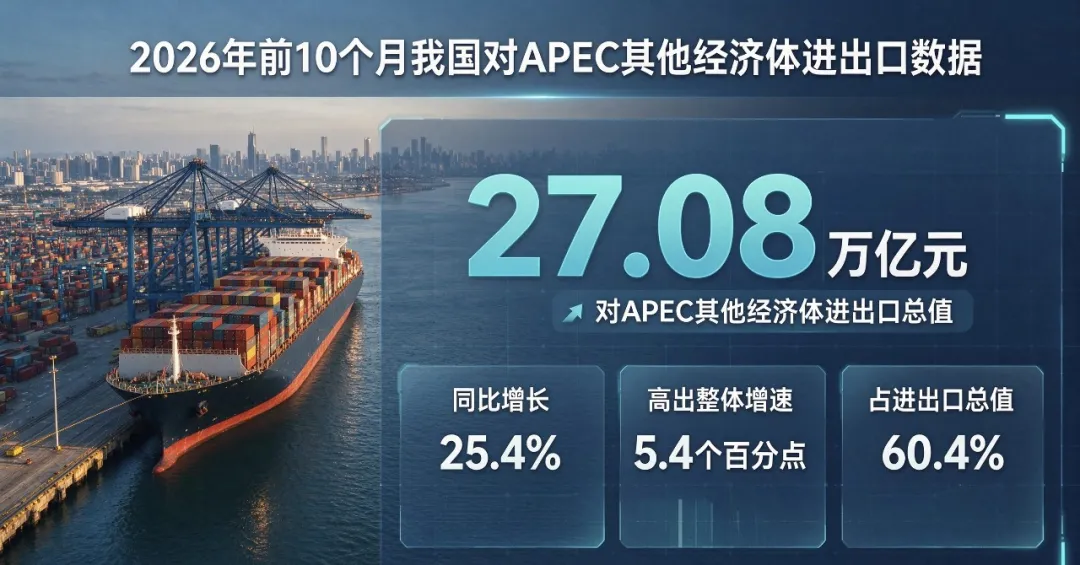
Data Release | China’s Trade with Other APEC Economies Rises by 25.4% in the First 10 Months
On 19 November 2026, Wang Yi, Member of the Political B…
APEC “China Year”|Foreign Minister Wang Yi Briefs on Outcomes of the 33rd APEC Economic Leaders’ Informal Meeting and Related Events
Time:2026-11-25 Source:大灣區進出口商業總會
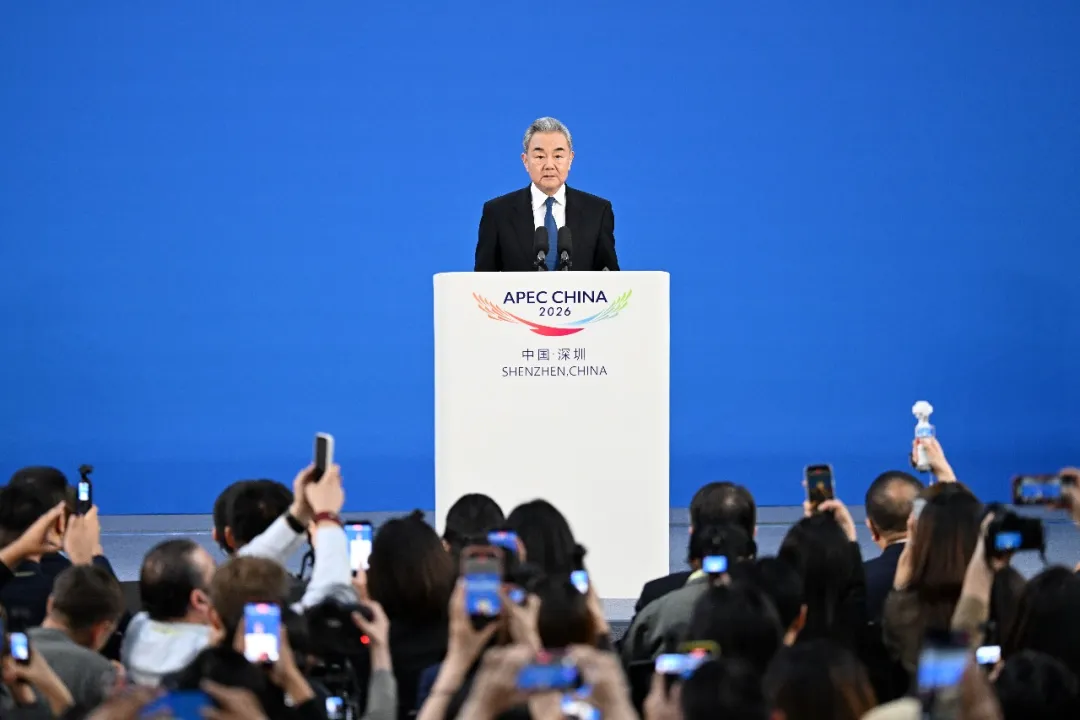
On 19 November 2026, Wang Yi, Member of the Political Bureau of the Communist Party of China Central Committee and Minister of Foreign Affairs, briefed Chinese and foreign journalists in Shenzhen on the outcomes of the 33rd APEC Economic Leaders’ Informal Meeting and related events, and answered questions from reporters.
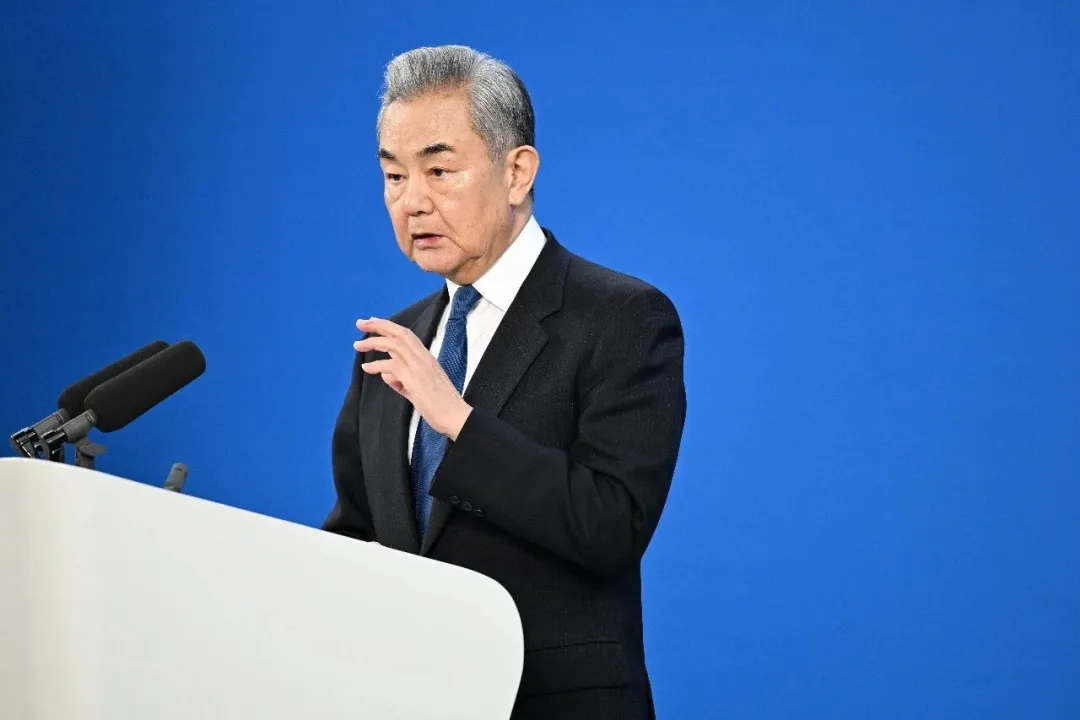
Wang Yi stated that this year marks APEC “China Year”. Over the past year, China has fully fulfilled its responsibilities as the host, successfully convening 321 APEC meetings and activities that drew tens of thousands of participants from all economies, setting a record in APEC history and injecting fresh vitality and strong impetus into Asia-Pacific cooperation. More than ten important outcomes were reached at the various specialized ministerial meetings, and openness, innovation and cooperation have become the high-frequency themes running through the whole year. In the area of openness, the Trade Ministers’ Meeting issued the Suzhou Statement, reaffirming commitment to advancing regional economic integration and deepening the building of the Free Trade Area of the Asia-Pacific (FTAAP). In the area of innovation, the Digital and AI Ministers’ Meeting issued the Chengdu Statement, proposing to empower the building of an Asia-Pacific community through the digital economy and artificial intelligence. In the area of cooperation, the Human Resources Ministers’ Meeting issued the Nanjing Statement, focusing on investing in people, improving employment and people’s livelihoods, and enhancing people’s wellbeing. The APEC CEO Summit held yesterday further released the Shenzhen Initiative, calling on the Asia-Pacific business community to join hands in building an Asia-Pacific community. A total of 75 major outcomes were achieved in meetings and activities across all fields over the year, which have been compiled into the Host List of Meetings and Activities and the Host List of Outcomes and released to the public.
The highlight of APEC “China Year” is the Leaders’ Informal Meeting that has just concluded successfully. This is China’s most important home-hosted diplomatic event of the year and a new peak forged in Asia-Pacific economic cooperation. Against a backdrop of turbulent international situations, pressure on global economic growth and rising anti-globalization, leaders and representatives of the 21 APEC economies gathered in Shenzhen to jointly explore responses and discuss cooperation strategies. This is of major significance for opening a new chapter in Asia-Pacific cooperation and will also have a far-reaching impact on safeguarding world peace and development. The world’s eyes are on China, focused on Shenzhen.
Over the past few days, President Xi Jinping chaired the Leaders’ Informal Meeting, attended the opening ceremony of the APEC CEO Summit, held bilateral meetings, chaired the China-Russia-US leaders’ meeting, and conducted nearly 20 bilateral and multilateral activities. Under the guidance of President Xi Jinping and with the support of leaders of all economies, the meeting reached the ambitious, pragmatic and comprehensive APEC Leaders’ Shenzhen Vision. This is the most important outcome of APEC “China Year” and a new milestone in APEC cooperation. The Shenzhen Vision has given renewed impetus to the building of the Asia-Pacific community, with important progress made in six areas:
First, defining the correct direction for Asia-Pacific cooperation. President Xi Jinping elaborated in depth on China’s position on “what kind of Asia-Pacific community to build and how to build it”. President Xi stressed that, in the face of a turbulent and intertwined international landscape, the Asia-Pacific should uphold the overall momentum of peace and stability, build bridges for open cooperation, unleash the drivers of innovation-led growth, expand paths for mutual benefit and win-win outcomes, and jointly build an Asia-Pacific community of solidarity, openness and connectivity, pioneering innovation and inclusive development, writing a new chapter in the “Asia-Pacific Miracle”. The important remarks of President Xi Jinping are visionary and far-sighted, making the banner of the Asia-Pacific community more prominent, its vision clearer and its path more defined. The participating leaders echoed President Xi’s remarks, supporting the transition of the Asia-Pacific community from a goal to action and from vision to reality, and pooling a formidable force for the development and prosperity of the Asia-Pacific.
Second, putting in place the “four beams and eight pillars” of the Asia-Pacific community. President Xi Jinping stressed that promoting common prosperity in the Asia-Pacific requires removing trade and investment barriers, building an open Asia-Pacific economy, and also promoting inclusive and balanced development that balances efficiency and equity. Working toward this goal, we have built cooperation mechanisms, put forward cooperation initiatives and formulated action plans, forming the “four beams and eight pillars” of the Asia-Pacific community. The “four beams” are economy and trade, connectivity, innovation and development. The “eight pillars” are the FTAAP, hard connectivity of infrastructure, soft connectivity of rules and regulations, people-to-people connectivity, as well as the digital economy, emerging technologies, capacity building and sustainable growth. These components echo and reinforce one another, underpinning the overall architecture of the Asia-Pacific community.
Third, injecting new impetus into the building of the FTAAP. This year marks the 20th anniversary of the proposal of the FTAAP vision. China advocates open regionalism and has pushed APEC members to move in the same direction to reinvigorate the FTAAP process. The meeting adopted the APEC Framework for Trade Digitalization Cooperation, an important measure to facilitate Asia-Pacific trade and support FTAAP building. During the meeting, statements were also issued by the Joint Foreign and Trade Ministers’ Meeting and the Statement on the FTAAP Agenda, emphasizing the importance of the multilateral trading system. These outcomes will promote the building of the FTAAP to keep pace with the times and advance steadily and far.
Fourth, upgrading Asia-Pacific connectivity cooperation. Connectivity is the bond of regional economic integration. The meeting reached an upgraded version of the APEC Connectivity Blueprint, advancing infrastructure development, supply-chain connectivity, policy and regulatory cooperation, and facilitation of people-to-people exchanges. During APEC “China Year”, parties also signed cooperation documents on connectivity covering smart customs, smart tourism and business travel facilitation. These outcomes have built bridges between Asia-Pacific economies, providing more solid support for regional economic integration.
Fifth, empowering Asia-Pacific innovation-led growth. Drawing on its own strengths, China facilitated the adoption of the APEC Statement on Emerging Technologies for Jobs and Prosperity in the Asia-Pacific, reaching cooperation consensus on using emerging technologies such as AI to promote high-quality full employment, improve public services and strengthen digital infrastructure, reflecting a people-centered and AI-for-good approach. A series of Digital Week events were also held during APEC “China Year”, producing important outcomes on digital-intelligent empowerment, open innovation ecosystems and cross-border data verification cooperation. These will strongly advance cooperation in innovation and cultivate new drivers and strengths for Asia-Pacific growth.
Sixth, building platforms for the delivery of Asia-Pacific cooperation. During the meeting, President Xi Jinping announced a series of voluntary measures by China to support Asia-Pacific cooperation, including: establishing the Asia-Pacific Community Research Centre, proposing the World Bay Area Economic Cooperation Alliance, providing new funding for practical APEC cooperation, and setting up new cooperation institutions in areas such as digital technology, cross-border data flows, clean energy and SME development. At the same time, taking full account of the diversity of the Asia-Pacific, a package of practical measures for development and people’s wellbeing was launched, covering transport, public health, energy, food security, human resources, anti-corruption and other fields. These measures meet the development needs of all parties and will strongly advance the in-depth and solid building of the Asia-Pacific community, continuously enriching its .
The meeting also fostered trust and solidarity among all sides in the Asia-Pacific. Leaders of the economies held a series of important bilateral and multilateral activities. President Xi Jinping met with US President Donald Trump, providing new strategic guidance on how to advance a constructive, strategic and stable China-US relationship. President Xi met with Russian President Vladimir Putin, reaching new cooperation consensus on deepening all-round strategic coordination between China and Russia.
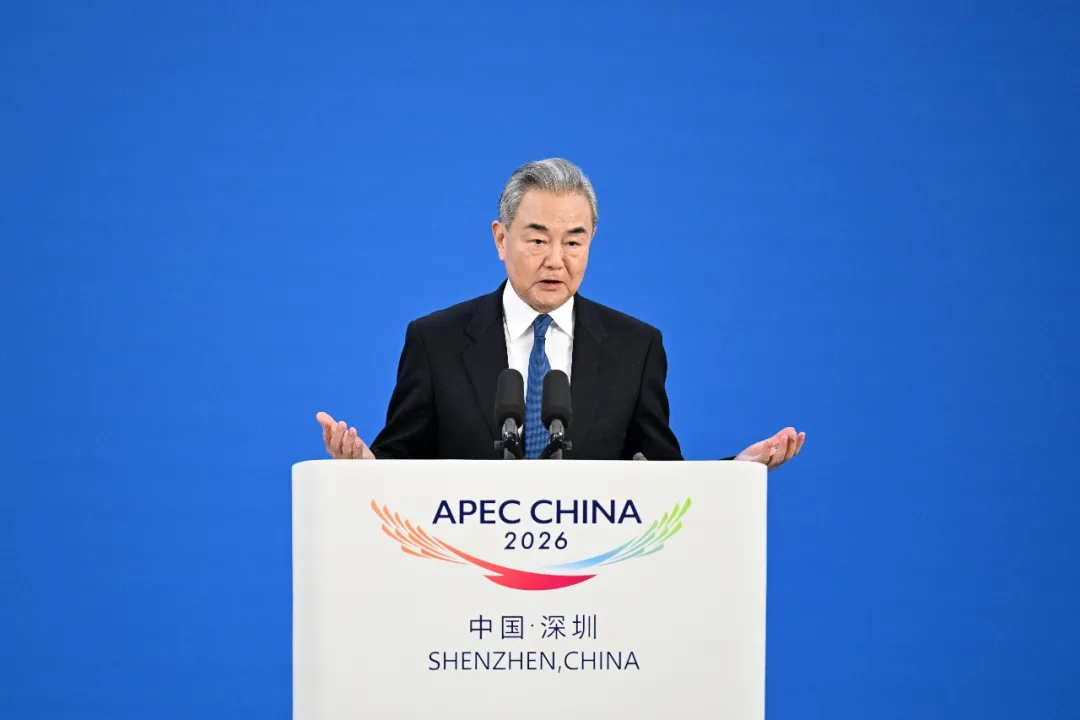
Wang Yi stated that all sides are closely following the China-Russia-US leaders’ meeting. President Xi Jinping, President Putin and President Trump held a meeting and exchanged in-depth views on major issues bearing on global peace, security and stability. This is the first meeting between the heads of state of the three countries in history. It is of great and far-reaching significance and a landmark event inscribed in history. The meeting was candid, friendly and constructive in atmosphere, produced a series of consensuses, and issued the Peace Declaration to the world, whose core is jointly safeguarding world peace and promoting strategic stability in major-country relations. It can be described as a “peace summit”.
Shenzhen is an important window of China’s reform and opening-up and a pilot demonstration zone of socialism with Chinese characteristics. China hosting the meeting in Shenzhen demonstrates its resolve to expand high-standard opening-up and promote the building of an open Asia-Pacific economy. We should take Shenzhen as a new starting point, press ahead firmly toward the goal of the Asia-Pacific community, make unremitting efforts for the wellbeing of the Chinese and Asia-Pacific peoples, and make greater contributions to world peace and development. Wang Yi also took questions from reporters.
Asked how China assesses the China-Russia-US leaders’ meeting, how the meeting consensuses will be implemented, and how it views its own role, Wang Yi stated that China, Russia and the US, as major world powers and permanent members of the UN Security Council, shoulder important responsibilities for promoting global peace and security. Centering on the theme of safeguarding world peace and promoting strategic stability in major-country relations, the top leaders of the three countries exchanged in-depth views on evolving international situations and global challenges, sending a positive signal to the world. The meeting is of great and far-reaching significance.
This was a historic and pioneering meeting. Major-country relations shape the evolution of the international landscape and bear on global strategic stability. The three heads of state held their first face-to-face meeting in history, setting a new record in interactions among the top leaders of the three countries, building a new paradigm for major-country interaction in the new era, and constituting a new practice in advancing a new type of major-country relationship — a major undertaking in the history of international relations.
This was a landmark meeting demonstrating major-country responsibility. At present, the world’s profound changes unseen in a century are accelerating, with risks and challenges emerging one after another. The international community increasingly yearns for peace and stability and calls for stronger communication and coordination among major countries. The meeting follows the tide of the times and meets the expectations of the world. President Xi Jinping stressed that when major countries live in harmony, the world will be at peace; when they confront each other, the world will be in chaos. The three heads of state explained their strategic intentions face to face, expressed willingness to prevent conflict and confrontation, hold the bottom line of peaceful coexistence, and seek a major-country relationship featuring peaceful coexistence, overall stability and balanced development, benefiting one another and the world at large.
This was a constructive meeting featuring in-depth communication and interaction. China has consistently held that all countries, big or small, are equal, and is committed to democratizing international relations and building an equal and orderly multipolarity. We hold that major countries, with greater resources and capabilities, should demonstrate the vision and responsibility of major countries and take the lead in upholding equality, good faith, morality, cooperation and setting an example in the international community. The Peace Declaration issued at the meeting consolidates the consensus of the three sides and is of major positive significance for responding more effectively to global challenges and safeguarding world peace and stability. As President Xi Jinping put it, the seeds sown today will surely take root, sprout, blossom and bear fruit. China will work with Russia and the US to fully and efficiently implement the consensuses reached by the three heads of state, maintain communication and coordination at the working level, and make unremitting efforts toward building a better world.
Asked why the meeting focused on building the Asia-Pacific community and what significance building such a community holds for China and the region, Wang Yi said: First, in the late 1980s, APEC emerged against the tide of economic globalization, and the concept of an Asia-Pacific community was nurtured in the APEC process. In 2020, APEC adopted the Putrajaya Vision, setting the goal of building an Asia-Pacific community by 2040. With little more than a decade to go before 2040, how to turn the Asia-Pacific community from a goal into action and from vision into reality requires new consensus and a clear answer from the Asia-Pacific family. Building on the Putrajaya Vision, the Shenzhen meeting has gone a step further, putting in place the “four beams and eight pillars” of the Asia-Pacific community and drawing up an implementation roadmap — timely and of great significance. It can be said that the building of the Asia-Pacific community has truly set sail from Shenzhen.
Second, in recent years, economic globalization has met headwinds, and some have questioned how far Asia-Pacific cooperation can go. Our clear commitment to building an Asia-Pacific community is meant to sound the strong call of the times for open cooperation. The 30-plus years of APEC history have proven that openness and cooperation are the right choice for development and revitalization. As President Xi Jinping pointed out firmly at today’s meeting, economic globalization may occasionally encounter reverse waves, but Asia-Pacific cooperation must not turn back. The adoption of the Shenzhen Vision shows that all sides are willing to overcome differences, jointly uphold APEC’s original aspiration, and push the Asia-Pacific community into a new stage of substantive advancement.
Third, the goal of an Asia-Pacific community is consistent with the vision of a community with a shared future for mankind advocated by President Xi Jinping. The concept of a community with a shared future for mankind originated in thinking about the shared destiny of the Asia-Pacific. In 2013, President Xi Jinping proposed fostering an Asia-Pacific community with a shared future, which has been continuously translated into and integrated into the APEC agenda in practice. The key to world development lies in the Asia-Pacific. The focus of this meeting on the Asia-Pacific community complements China’s efforts to promote a community with a shared future for mankind. It is a perfect combination of China’s vision and the Asia-Pacific aspiration, and will surely leave a brilliant chapter in the history of Asia-Pacific cooperation.
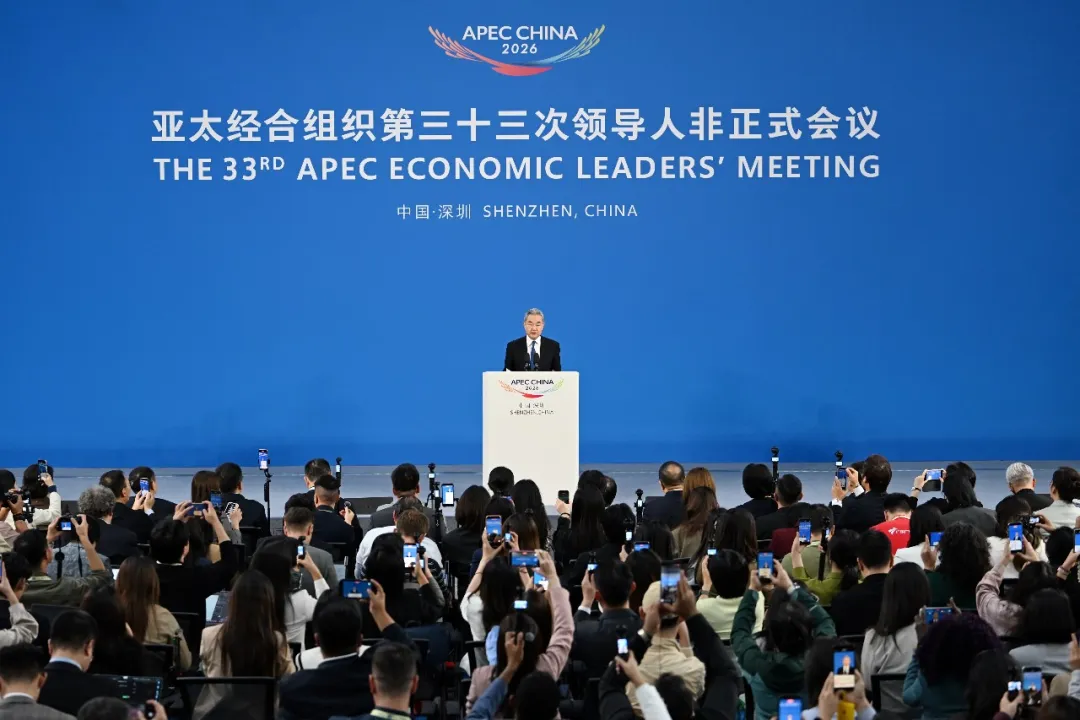
Source: Reposted from the WeChat official account and website of the Ministry of Foreign Affairs.
Data Release | China’s Trade with Other APEC Economies Rises by 25.4% in the First 10 Months
On 19 November 2026, Wang Yi, Member of the Political B…
 2025-12-30
 2025-11-21