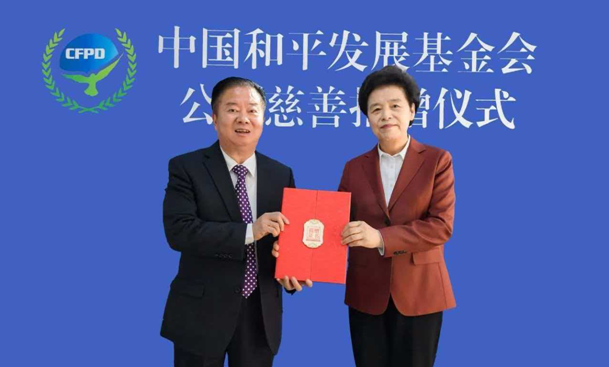
Lin Long’an Donates RMB 3 Million to Public Welfare and Peace Development
By Lin Long’an Member of the National Committee of the …
Opinion | The Call of the Times for National Security Education Day
Time:2026-06-02 Source:大灣區進出口商業總會
By Lin Long’an
Member of the National Committee of the Chinese People’s Political Consultative Conference
President of the Greater Bay Area Importers and Exporters Association
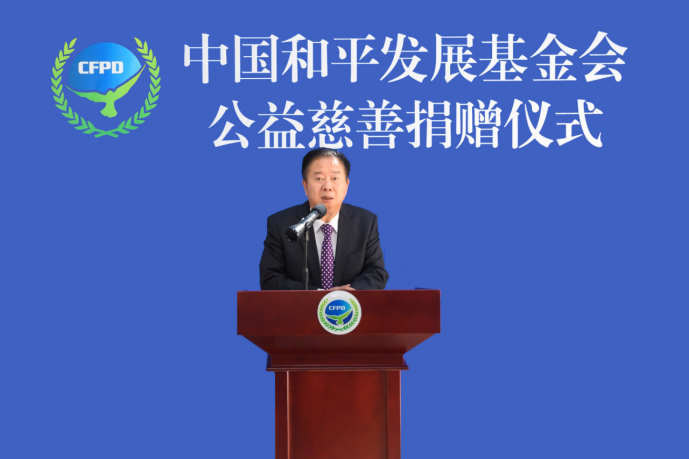
April 15 is designated as National Security Education Day. Safeguarding national security is a long‑term undertaking with a clear starting point but no final destination. National Security Education Day serves both as a wake‑up call and a rallying cry. For Hong Kong, it is not merely a designated day for legal outreach and public education; it is a vital opportunity to reflect on history, assess the present, and look ahead to the future. It reminds us at all times that past stability and prosperity were hard‑won, and long‑term peace and security in the years to come require our joint protection. In the great practice of One Country, Two Systems, only by building an impregnable fortress for national security can Hong Kong withstand external turbulence and risks. Only when every Hong Kong citizen becomes a conscious guardian of national security can the Pearl of the Orient shine even more brightly on the path from order to prosperity.
The 2019 turmoil over the amendment bill severely trampled on Hong Kong’s rule of law, disrupted social order, and laid bare huge loopholes in Hong Kong’s national security defenses. In response to the grave situation, the central authorities acted decisively and enacted the Hong Kong National Security Law in 2020中国人大网. This single law brought stability to Hong Kong, marking a decisive turning point from chaos to order in society. Yet strengthening national security is never achieved overnight, nor can one law alone provide a permanent solution.
Over time, Hong Kong’s legal framework for safeguarding national security has steadily improved. In particular, the smooth enactment and implementation of the Safeguarding National Security Ordinance (legislation for Article 23 of the Basic Law) signaled that the Hong Kong Special Administrative Region has finally fulfilled its constitutional dutySecurity Bureau 保安局. This Ordinance complements the Hong Kong National Security Law, forming a seamless dual protection system that effectively closes past legal gaps in areas such as treason, sedition, and theft of state secrets. With this, Hong Kong has built an unbreakable legal safety net for national security, laying the most solid institutional foundation for lasting prosperity and stability and allowing Hong Kong to forge ahead unburdened on the broad road toward prosperity.
Facts throughout history and across the globe have proven: without national security, there can be no social stability; without social stability, economic development, democracy and freedom, and people’s well‑being are all castles in the air. Hong Kong society must build strong consensus, stay vigilant at all times, and take safeguarding national security as its supreme interest and the fundamental prerequisite for ensuring the steady and sustained implementation of One Country, Two Systems.
When discussing national security, there was once a misconception in society that emphasizing national security would harm Hong Kong’s business environment and even weaken its status as an international financial center. Facts and data, however, give the most resounding answer.

Security is the prerequisite for development, and development is the guarantee of security. Capital is most honest; it always flows to stable and predictable markets. The recent conflict in Iran and massive capital outflows from the Middle East offer the best illustration. A society plagued by unrest and weak rule of law can never attract long‑term cross‑border investment. Since the improvement of the national security legal system, Hong Kong’s social order has been fully restored and the rule of law upheld, providing a safer, more transparent, and predictable business environment for investors at home and abroad.
Faced with complex global geopolitical rivalry, Hong Kong, as the nation’s super connector, super value adder, and bridgehead for opening up, inevitably confronts various challenges to economic and financial security. Safeguarding national security therefore means more than preventing political subversion and sabotage; it protects Hong Kong’s economic lifeline, ensures Hong Kong’s smooth integration into the nation’s overall development, and consolidates its unique advantages in pursuing high‑quality development.
On National Security Education Day, we must deepen our understanding of the ** holistic approach to national security**. In the AI era, the connotation and extension of national security have undergone profound changes. It is no longer confined to traditional political and military security but covers economic, cultural, social, scientific, technological, cyber, ecological, and artificial intelligence domains. Hong Kong’s national security education must therefore be forward‑looking and holistic, guiding the public to recognize the hidden nature and destructive power of these non‑traditional security threats.
With highly developed and fast‑flowing information, Hong Kong faces particularly acute non‑traditional security challenges:
The deterrent effect of law sets the bottom line, while the enlightenment of education touches the soul. The core of National Security Education Day lies in the whole nation and education. To take root in people’s hearts, the concept of national security requires extensive, in‑depth, and sustained publicity and education.
School education is the main front. Young people are Hong Kong’s future and the nation’s future. Past lessons show that the lack of national education can leave the younger generation adrift in complex political storms. National security education must therefore be organically integrated into the curricula of Hong Kong’s kindergartens, primary, and secondary schools. Rather than rigid preaching, it should use vivid history, culture, and national conditions education to foster young people’s sense of national identity, national pride, and critical thinking to distinguish right from wrong, so they understand from the heart that no nation, no home.
The participation of the whole society is key. National security education should not be limited to April 15 but should become regular and popular. The HKSAR government, media, social organizations, and enterprises all bear corresponding responsibilities. Through exhibitions, lectures, quizzes, community campaigns, and other diverse activities, using language and forms accessible to the public, we can turn complex legal provisions into common sense. Every citizen should understand that safeguarding national security is not a distant grand narrative but a vital interest closely linked to personal livelihood, career, and daily life. Abiding by national security laws and resisting acts that disrupt social peace are the duties and responsibilities of every citizen.
Source: Ta Kung Pao
https://m.tkww.hk/s/202604/13/AP69dc6f2ae4b04773b06b5175.html
Lin Long’an Donates RMB 3 Million to Public Welfare and Peace Development
By Lin Long’an Member of the National Committee of the …
Blooming Bauhinia Reaches for the Stars: Hong Kong Payload Specialist Realises Space Dream
By Lin Long’an Member of the National Committee of the …
 2025-12-30
 2025-11-21