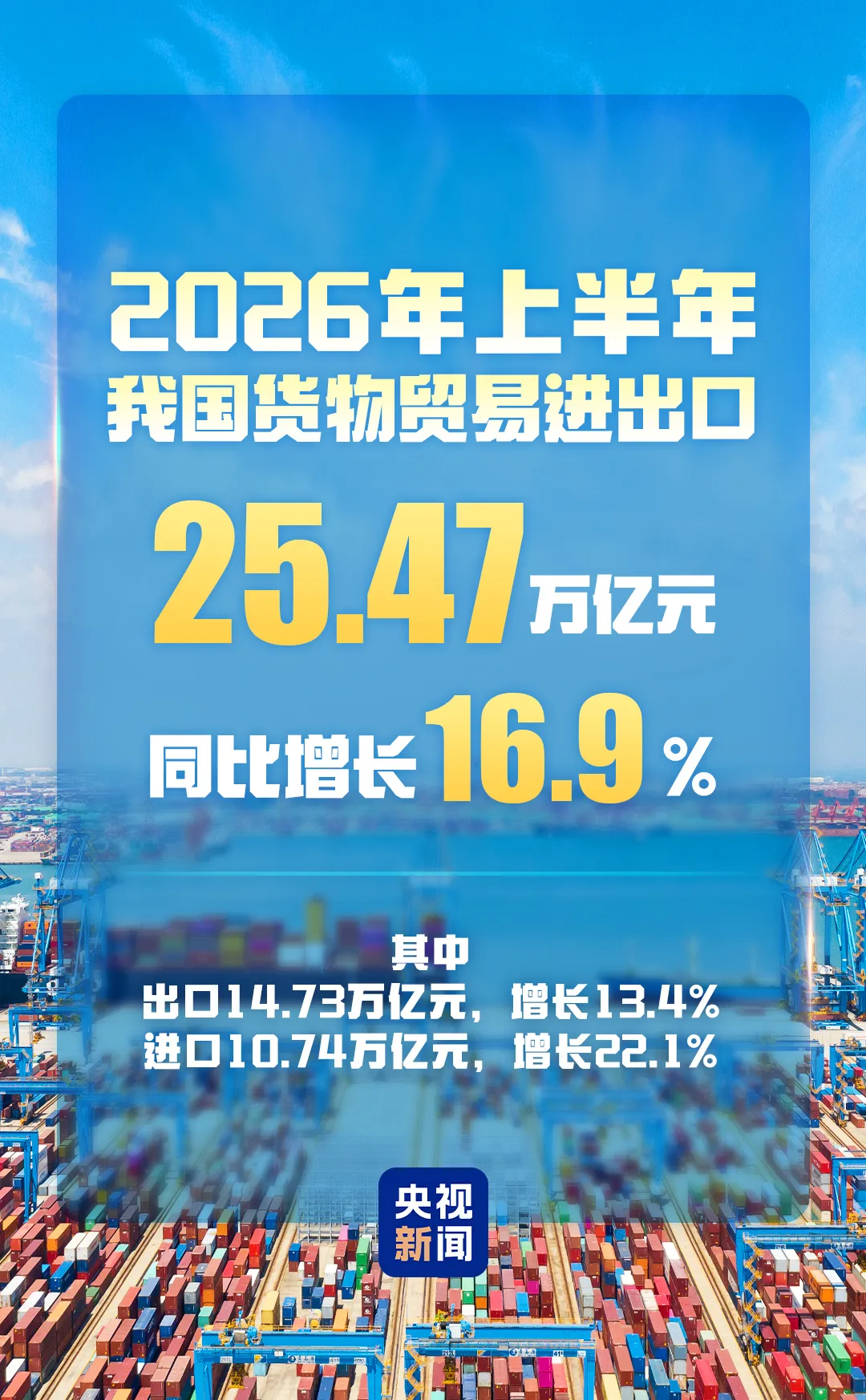
Industry News | China's Foreign Trade Tops 25 Trillion Yuan in First Half, Up 16.9% Year-on-Year
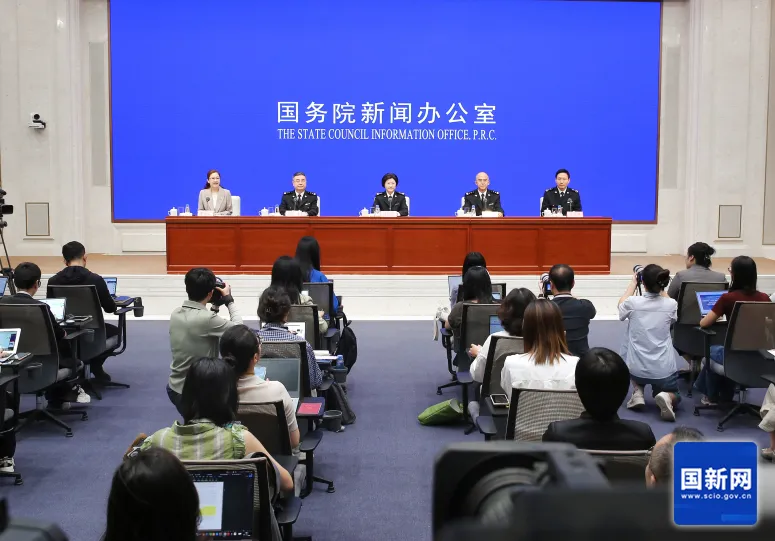
On 17 July, the Information Office of the People’s Gove…
5.3 Trillion Yuan! Foreign Trade Performance of the 9 Mainland Cities in the Greater Bay Area Released for H1
Time:2026-07-24 Source:大灣區進出口商業總會
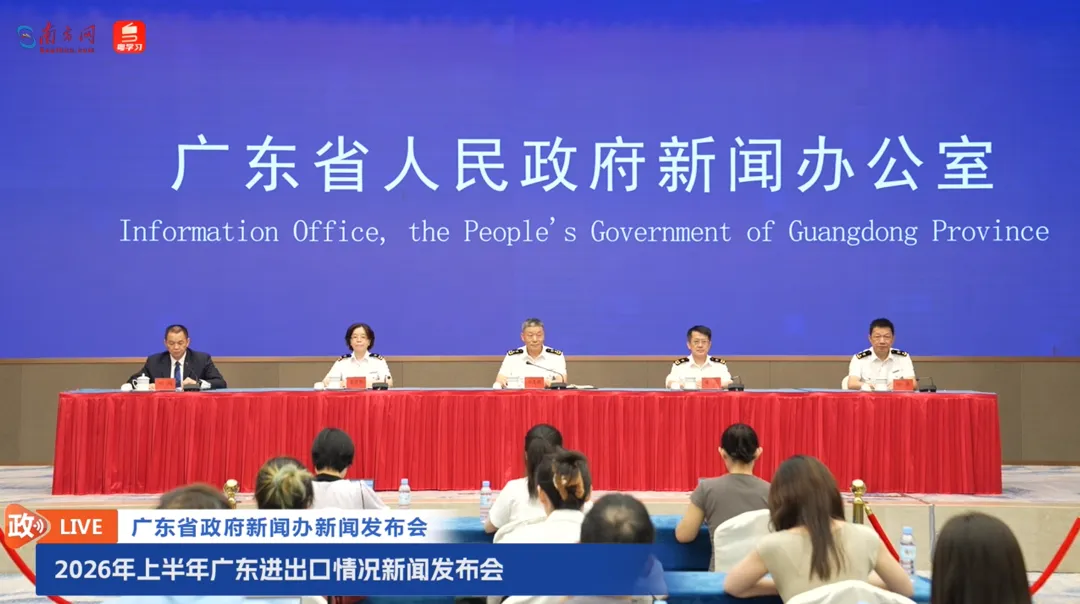
On 17 July, the Information Office of the People’s Government of Guangdong Province held a special press conference on Guangdong’s import and export performance in the first half of the year. The Guangdong Sub-Administration of the General Administration of Customs released authoritative core data: In H1, Guangdong’s total import and export of goods reached 5.49 trillion yuan, exceeding the 5-trillion-yuan threshold for the first time in the same historical period, up 20.8% year-on-year. It accounted for 21.6% of China’s total foreign trade, with an incremental trade volume of 944.71 billion yuan, contributing 25.6% to national foreign trade growth. Guangdong ranked first nationwide in terms of foreign trade share, increment and contribution.
As the core gateway for Guangdong’s opening-up and the most open economic region in China, the nine mainland cities of the Guangdong-Hong Kong-Macao Greater Bay Area serve as the core engine driving robust foreign trade growth for the province and the whole country. Official statistics show that the aggregate import and export volume of the nine mainland Greater Bay Area cities surpassed 5.3 trillion yuan in H1, surging 20.9% year-on-year, 4 percentage points higher than the national average growth rate. The figure represented 20.8% of China’s total imports and exports, contributing 24.9% to national growth in the same period. Of this total, exports stood at 3.12 trillion yuan, rising 11.5%; imports hit 2.18 trillion yuan, growing 37.5%.
This remarkable performance not only set a new record for the Greater Bay Area’s foreign trade in the corresponding period, but also underpinned national foreign trade growth, contributing nearly one quarter of the country’s trade increment. Accounting for 20.8% of China’s total foreign trade volume, the region stands as a key force to stabilise foreign trade, explore markets and foster new growth drivers. Notably, the nine Greater Bay Area cities generated over 96% of Guangdong’s foreign trade volume, forming the absolute core support behind Guangdong’s all-time highs in foreign trade.
Ranking Nationwide No.1 with Strong Momentum Shenzhen retains its position as China’s top city for foreign trade. Its total import and export volume reached 2.88 trillion yuan in H1, growing 33% year-on-year, marking five consecutive quarters of positive growth. The city hosts more than 60,000 enterprises with actual import and export records, the largest number nationwide. The top 100 leading enterprises contribute over 60% of the city’s total trade volume, consolidating the foundation of foreign trade. Leveraging its status as the host city of the 2026 APEC Summit, Shenzhen recorded imports and exports worth 1.98 trillion yuan with APEC economies in H1, up 33% year-on-year, emerging as a pivotal hub linking China to Asia-Pacific trade.
Optimised Structure and Boom in Featured Commodities Guangzhou’s foreign trade is steadily advancing toward high-quality transformation with continuous upgrading of commodity structure. Export growth of consumer goods exceeded 20%, and exports of independent brands reached 101.16 billion yuan, delivering notable results for brand globalisation. Exports of high-end manufacturing and featured consumer goods posted strong performance. Over 150,000 electric passenger vehicles were exported in H1, valued at 16.5 billion yuan, doubling year-on-year. Cosmetics exports totalled 5.5 billion yuan, rising 34.5% year-on-year, keeping Guangzhou as China’s top city for cosmetics exports.
Steady Progress Supported by the Real Economy Boasting a solid manufacturing base, Dongguan’s foreign trade maintained steady growth. From January to May 2026, imports and exports totalled 659.30 billion yuan, up 7.1%. Exports reached 399.04 billion yuan (+7.4% YoY) and imports 260.26 billion yuan (+7% YoY), featuring balanced two-way trade. The real economy continued to underpin foreign trade development.
Enhanced Resilience & Upgraded Smart Manufacturing Trade Supported by advanced manufacturing clusters, Foshan’s foreign trade demonstrated stable resilience alongside volume and quality growth. Preliminary monitoring shows that from January to May 2026, its total import and export volume reached 212.1 billion yuan, an increase of 8.7% year-on-year. Exports of traditional competitive industrial goods including home appliances, hardware and machinery equipment remained stable, while the share of smart manufacturing products in exports kept rising. Industrial upgrading continuously fuels high-quality foreign trade development. Private enterprises became the main driver of trade growth, small and medium manufacturers gained increasing momentum to go global, and regional foreign trade coordination developed soundly.
Leading Growth with Sustained Industrial Momentum Huizhou delivered striking foreign trade growth among Greater Bay Area cities. From January to May 2026, total imports and exports hit 189.264 billion yuan, up 16.7% year-on-year, including exports of 106.123 billion yuan (+18.6% YoY) and imports of 83.141 billion yuan (+14.3% YoY), both achieving double-digit growth. Relying on core industries such as electronic information, new energy and high-end petrochemicals, exports of high-tech products including new energy batteries and smart terminals performed prominently, translating complete industrial chain advantages into foreign trade competitiveness.
Balanced Growth with Solid Advantages in Light Industry Trade Zhongshan’s foreign trade operated smoothly amid structural optimisation. From January to May 2026, total imports and exports reached 134.07 billion yuan, rising 12.3% year-on-year. Exports stood at 115.53 billion yuan (+9.7% YoY) and imports 18.54 billion yuan (+31.8% YoY). The sharp uptick in import growth reflected sufficient industrial capacity release and robust domestic demand. Exports of featured light industrial products such as lighting fixtures, smart home appliances and hardware maintained solid competitiveness. New trade forms including cross-border e-commerce and market procurement trade continued to gain traction, supporting steady progress in foreign trade fundamentals.
Breakthroughs in Featured Sectors Driven by Port Trade Benefiting from its geographic proximity to Hong Kong and Macao plus policy dividends in Hengqin, Zhuhai’s foreign trade grew steadily with improved quality. From January to May 2026, total imports and exports amounted to 148.501 billion yuan, up 5.5% year-on-year, with exports of 99.036 billion yuan (+3.1% YoY) and imports of 49.466 billion yuan (+10.7% YoY), showing balanced two-way expansion. Cross-border trade between Zhuhai, Hong Kong and Macao, as well as bonded trade flourished. Cross-border e-commerce registered remarkable growth, and exports of high-tech goods such as biomedicine and precision manufacturing expanded, further consolidating Zhuhai’s position as an opening-up hub in the western Greater Bay Area.
Steady Quality Improvement Empowered by Overseas Chinese Trade Jiangmen’s foreign trade maintained stable growth and improved quality. From January to May 2026, total imports and exports reached 83.72 billion yuan, rising 4.7% year-on-year, including exports of 72.08 billion yuan (+5.0% YoY) and imports of 11.64 billion yuan (+2.4% YoY). Exports displayed sufficient resilience with balanced trade structure. Drawing on its strengths as an overseas Chinese hometown, the city maintained stable trade channels with Southeast Asia, Europe and the US. Exports of competitive products including hardware, textiles & garments and small home appliances grew steadily, and private enterprises continuously energised foreign trade development.
Soaring Growth with Late-development Advantages Fully Unleashed Zhaoqing achieved leapfrog foreign trade growth, leading the province in growth rate. From January to May 2026, total imports and exports reached 23.4 billion yuan, surging 38.2% year-on-year. The scale of overall trade, exports and imports all hit record highs for the same period, marking 16 consecutive months of double-digit growth. Exports stood at 16.33 billion yuan (+34.7% YoY) and imports 7.07 billion yuan (+47.1% YoY), demonstrating tangible results in industrial relocation and capacity landing. Foreign trade in advanced manufacturing, new materials and fast fashion industries expanded rapidly, highlighting its incremental late-development strengths.
The robust foreign trade growth across the Greater Bay Area represents not merely volume expansion, but simultaneous advancement across dimensions including quality, structure, market layout and coordination, lifting the value of growth. Imports rebounded sharply; import growth of the nine mainland cities reached 37.5% in H1. Domestic industrial upgrading and consumption upgrading drove concentrated demand for high-end equipment, core components and premium consumer goods, amplifying the linkage efficiency of the domestic and international dual circulation.
Export commodity portfolios accelerated iteration. Exports of new energy vehicles, smart terminals, high-end equipment and green products maintained rapid growth, while the share of traditional labour-intensive goods continued to decline. New quality productive forces emerged as the core driver of foreign trade expansion. Meanwhile, market diversification advanced further. While consolidating traditional European and American markets, enterprises kept exploring emerging markets including ASEAN, the Middle East, Latin America and Africa, effectively mitigating risks from single-market volatility and strengthening the resilience of foreign trade development.
Fueled by institutional reforms to align rules and strengthen regulatory coordination among Guangdong, Hong Kong and Macao, facilitation policies such as one manifest, two declarations and priority inspection have been fully implemented. Key cooperation platforms including Qianhai, Nansha, Hengqin and Hetao continued to release institutional dividends, lowering corporate customs clearance and logistics costs and removing bottlenecks obstructing the flow of trade factors across the Bay Area.
With deepening industrial coordination, continuous cultivation of new trade forms and in-depth advancement of customs facilitation reforms, the Greater Bay Area’s foreign trade is expected to sustain its steady upward trend with improved quality and efficiency in H2, delivering solid momentum to stabilise national foreign trade growth.
Data Source: Guangdong Sub-Administration of the General Administration of Customs, data released by customs authorities, commerce bureaus and statistics bureaus of the nine cities.
Industry News | China's Foreign Trade Tops 25 Trillion Yuan in First Half, Up 16.9% Year-on-Year
On 17 July, the Information Office of the People’s Gove…
On 17 July, the Information Office of the People’s Gove…
 2025-12-30
 2025-11-21