President’s Column|Hong Kong’s Import and Export Trade Development amid EU-China Trade Rebalancing
By Lin Long’an Member of the National Committee of the …
President’s Column | Opportunities and Tests for Hong Kong Brought by the APEC Finance Ministers’ Meeting
Time:2026-10-21 Source:大灣區進出口商業總會
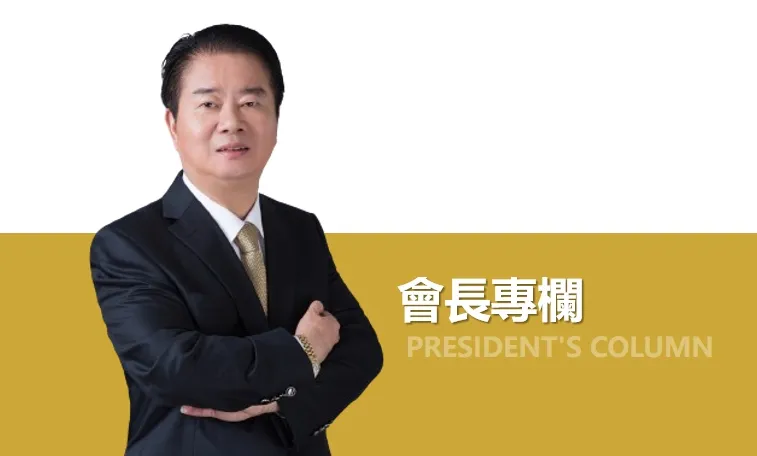
By Lin Long’an Member of the National Committee of the Chinese People’s Political Consultative Conference President, GREATER BAY AREA IMPORTERS AND EXPORTERS ASSOCIATION
The 33rd APEC Finance Ministers’ Meeting was held at the Hong Kong Convention and Exhibition Centre in Wan Chai from 20 to 21 October. Around 500 participants, including finance ministers or representatives from 21 economies and heads of international organisations, gathered in Hong Kong. This marks the first time an APEC meeting has been hosted in Hong Kong. The event was organised by the Ministry of Finance of the People’s Republic of China and undertaken by the Hong Kong Special Administrative Region Government. Held at the start of the 15th Five-Year Plan and shortly after the release of Hong Kong’s first Five-Year Plan, this conference carries greater significance than an ordinary international gathering. It serves as a window to observe how Hong Kong positions itself within the nation’s new five-year development blueprint.
Hong Kong joined APEC under the name “Hong Kong, China” in 1991. For more than three decades, it has been a participant in Asia-Pacific financial and fiscal dialogues. By shifting from a speaker to a host this time, Hong Kong not only voices its views at the meeting but also builds platforms outside the venue, taking part in agenda organisation and implementation. Aligned with the 15th Five-Year Plan, Hong Kong’s positioning has upgraded from “integrating into” to “integrating into and serving” national development. The “Eight Centres” has been expanded into “Ten Centres, Two Hubs and One Ecosystem”. Moving from “integration” to “service” requires Hong Kong to shift from passive alignment to proactive action. Hosting the Finance Ministers’ Meeting is a practical exercise translating planning documents into concrete practices on the international stage. In addition, China serves as APEC host this year, and the APEC Economic Leaders’ Meeting will be held in Shenzhen in November. The Finance Ministers’ Meeting acts as a precursor, demonstrating clear Hong Kong-Shenzhen coordination.
This meeting revolves around four themes: fiscal policies supporting people’s livelihood development, financing for digital infrastructure, inclusive finance, and exchanges of young financial and economic professionals. While each theme has its own focus, many correspond closely to Hong Kong’s comparative advantages. Economies across the region generally face pressures of stabilising growth, preventing risks and safeguarding people’s livelihood. Fiscal policies for livelihood need to strike a balance between sustainability and inclusiveness. Hong Kong has long practiced prudent fiscal management, and its experience offers valuable reference. In terms of digital infrastructure, investment demand has surged driven by artificial intelligence and data centres. Reliance on public finance alone is insufficient, making mobilisation of private capital essential. Hong Kong boasts a mature bond market and a network of international investors, equipping it to act as a “financing bridge”. During his recent meeting with the President of the Asian Infrastructure Investment Bank, Chief Executive John Lee welcomed the AIIB to issue bonds via Hong Kong’s bond market and channel capital into high-quality green projects. As for inclusive finance and young talent, they echo Hong Kong’s development of fintech and its goal of building an international talent hub.
Investors, nevertheless, look for clear policy directions, viable revenue models, transparent procurement arrangements and reasonable risk-sharing. Hong Kong should not merely focus on “fundraising”. It should leverage its professional strengths to conduct project appraisal, risk allocation, contract enforcement and post-project management, so that the value of professional services can be fully realised.
Competition among international financial centres is shifting from a contest of scale to a contest of ecosystems. Other regional hubs are also forging ahead. Investors compare not only market size and tax rates, but also clarity of rules, policy predictability, effective dispute resolution, and whether cross-border projects can be delivered on time and within budget. Even a mature capital market cannot create advantages independently if projects are poorly prepared, approval procedures are ambiguous and institutional coordination costs remain high.
Looking ahead, three trends merit attention. First, financing for digital infrastructure will become a new focus for Asia-Pacific fiscal and financial cooperation. Whoever builds efficient channels connecting capital and projects will gain an edge in the new round of competition. Second, with rising uncertainties in the global economy, regional policy coordination and open cooperation grow more important. Hong Kong’s unique advantage of “backed by the motherland and connected to the world” is expected to have greater room to play. Third, the strengths of a single market will gradually give way to comprehensive cross-market, cross-asset and cross-border service capabilities.
This meeting has shown the world an open, professional Hong Kong capable of hosting high-level fiscal and financial conferences. It also helps Hong Kong clearly define its position within regional and national frameworks at the start of the 15th Five-Year Plan. Opportunities, however, do not automatically turn into tangible outcomes. Hong Kong cannot rely solely on the publicity from a single conference. To turn international attention into capital and projects, it must continuously optimise the business environment, strengthen legal and dispute-resolution services, expand talent supply, and establish credible balance between security and openness through clear, stable and proportionate regulations. Evolving from a convenor to a co-builder, and translating conference outcomes into long-term growth momentum, calls for both the patience embodied in the Five-Year Plan and solid delivery in day-to-day implementation.
President’s Column|Hong Kong’s Import and Export Trade Development amid EU-China Trade Rebalancing
By Lin Long’an Member of the National Committee of the …
By Lin Long’an Member of the National Committee of the …
 2025-12-30
 2025-11-21